Coco Drop
Studio Brightlineviz inc. | Internal Project | Blender 5.1
It started with a photograph.
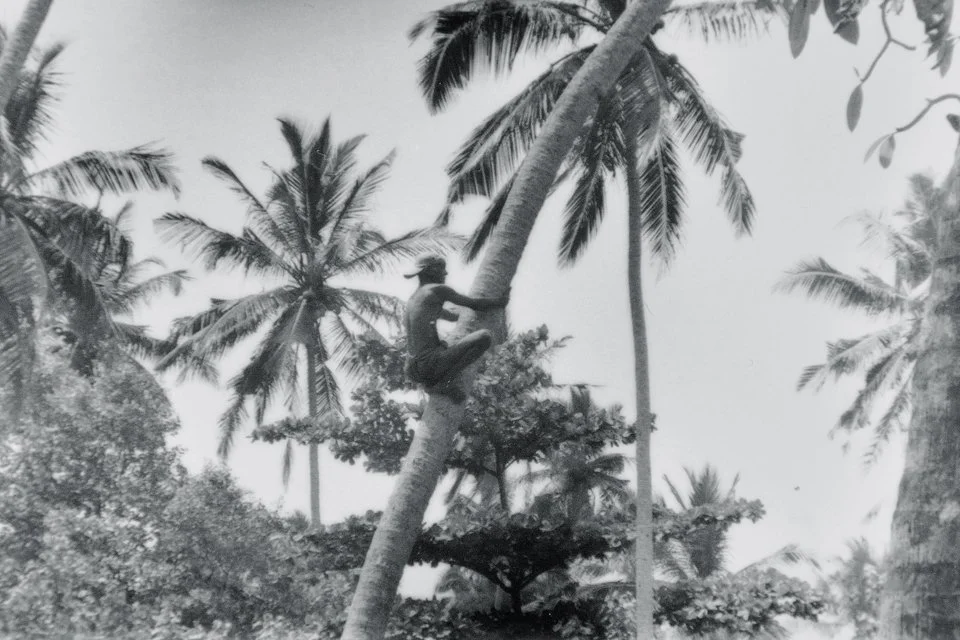
Scrolling through Pinterest, I came across an image of a young man climbing a palm tree — bare hands, bare feet, working his way up toward a cluster of coconuts at the top. Something about it stuck. The simplicity of it. The effort. The story already built into a single frame.
That image became Coco Drop — a two-shot 3D animated short I produced myself, from my apartment in Montreal, on my laptop.
The Story
Two friends head out to collect coconuts.
One gets to work, scaling the palm tree to grab the goods. The other? He finds a comfortable patch of sand in the shade and falls asleep.
It's a small story. A quiet one. But it has character, warmth, and a setup that anyone who has ever had that friend will immediately recognize.
Why I Made It
Coco Drop wasn't a client project — it was a pipeline project.
I'm Gustavo, the founder of BVIZ. I have 12 years in the feature animation industry, most of it as a Camera Layout and Previs artist. I started Studio Brightlineviz because I wanted to build something of my own — a real production house, with a team, producing work across animation and visualization for brands, studios, and storytellers of all kinds.
But right now, it's me. One laptop. One apartment in Montreal.
And that's exactly why projects like Coco Drop matter. One of the most important things I can do at this stage is keep producing, keep testing, and keep sharpening the way I work — before the pressure of a client deadline is on the table. This is the latest in a series of internal projects I've been building to do exactly that.
It also gave me new content to share — proof of what BVIZ can produce, and a window into how I think about storytelling.
The Process
From Pinterest to Final image
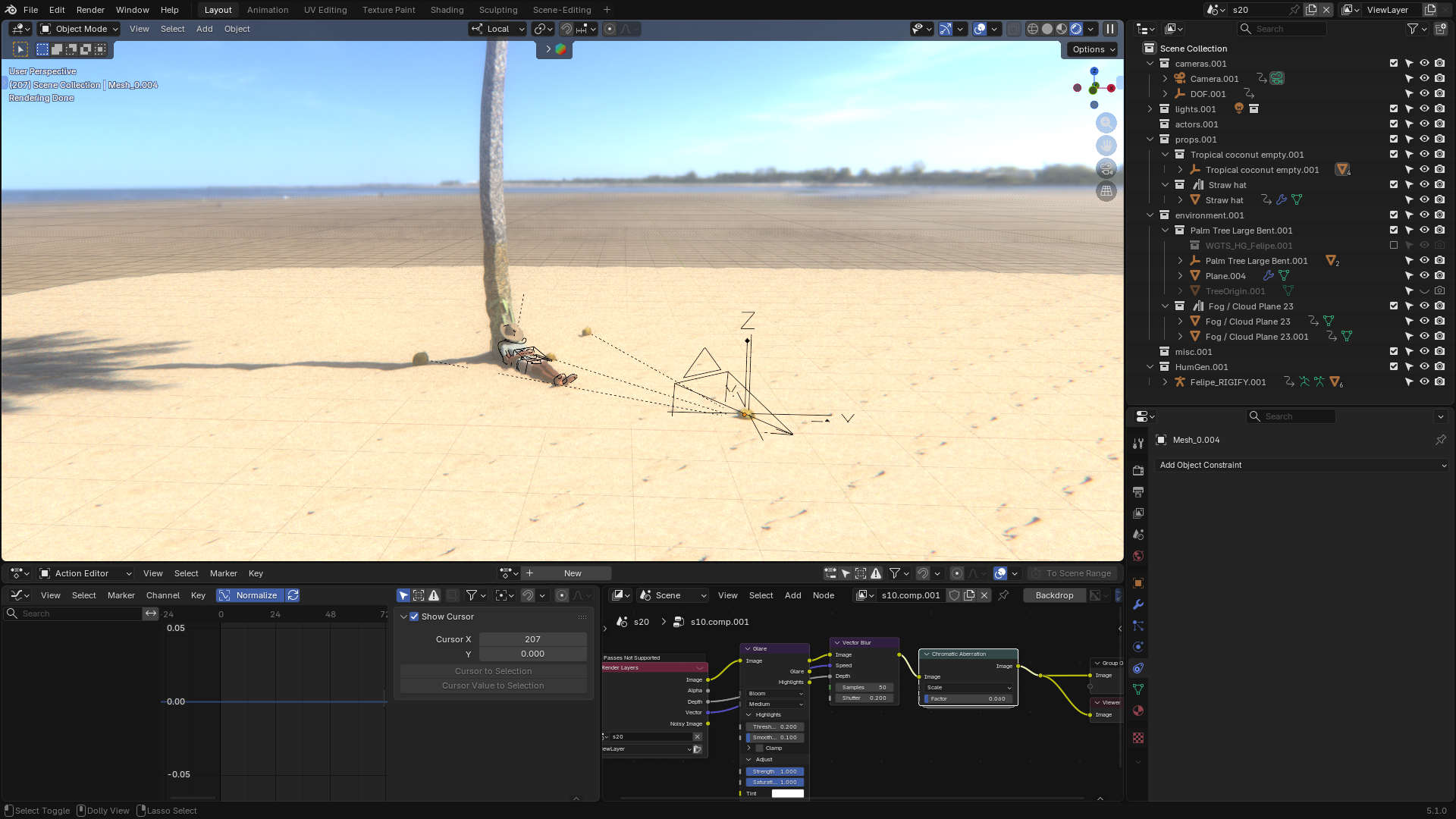
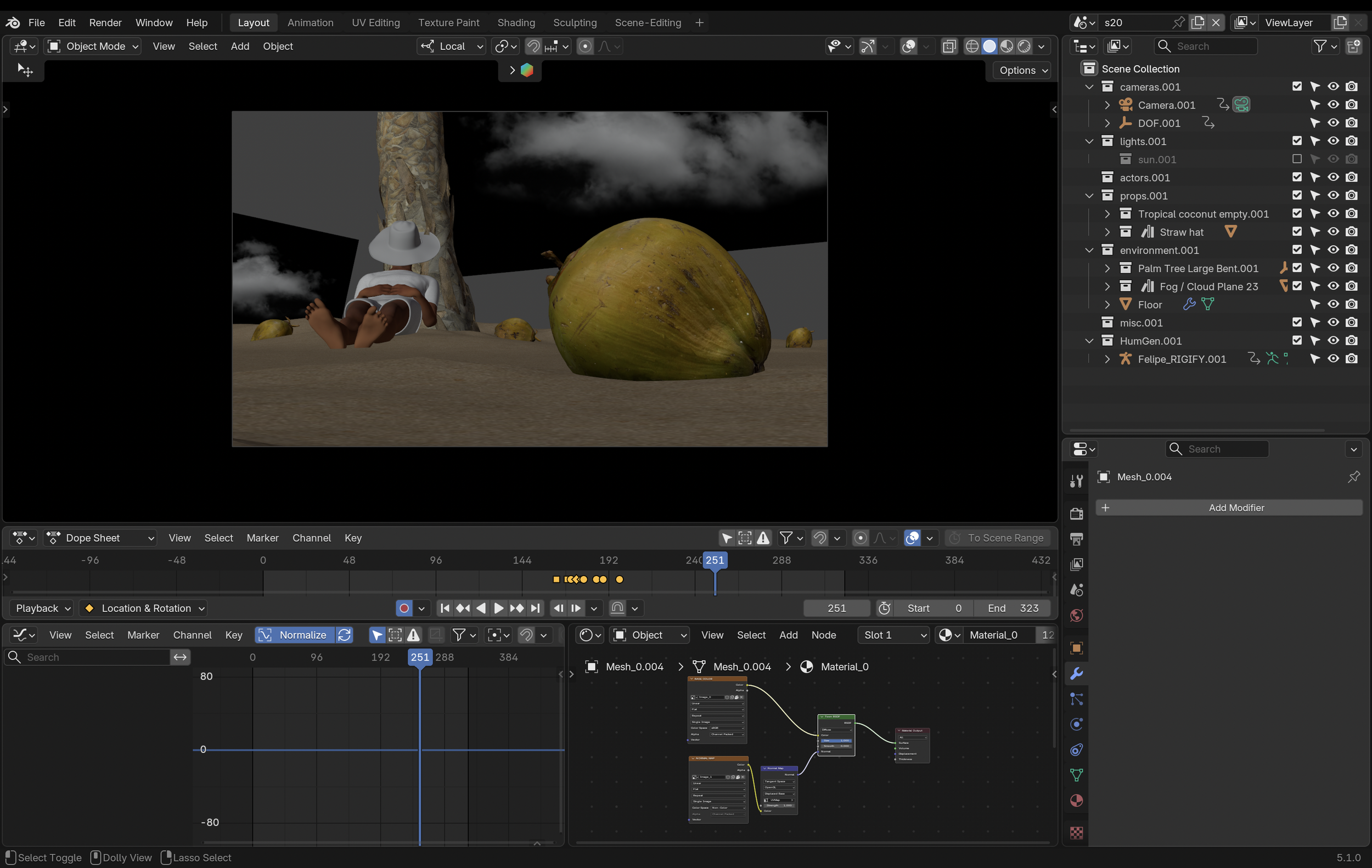
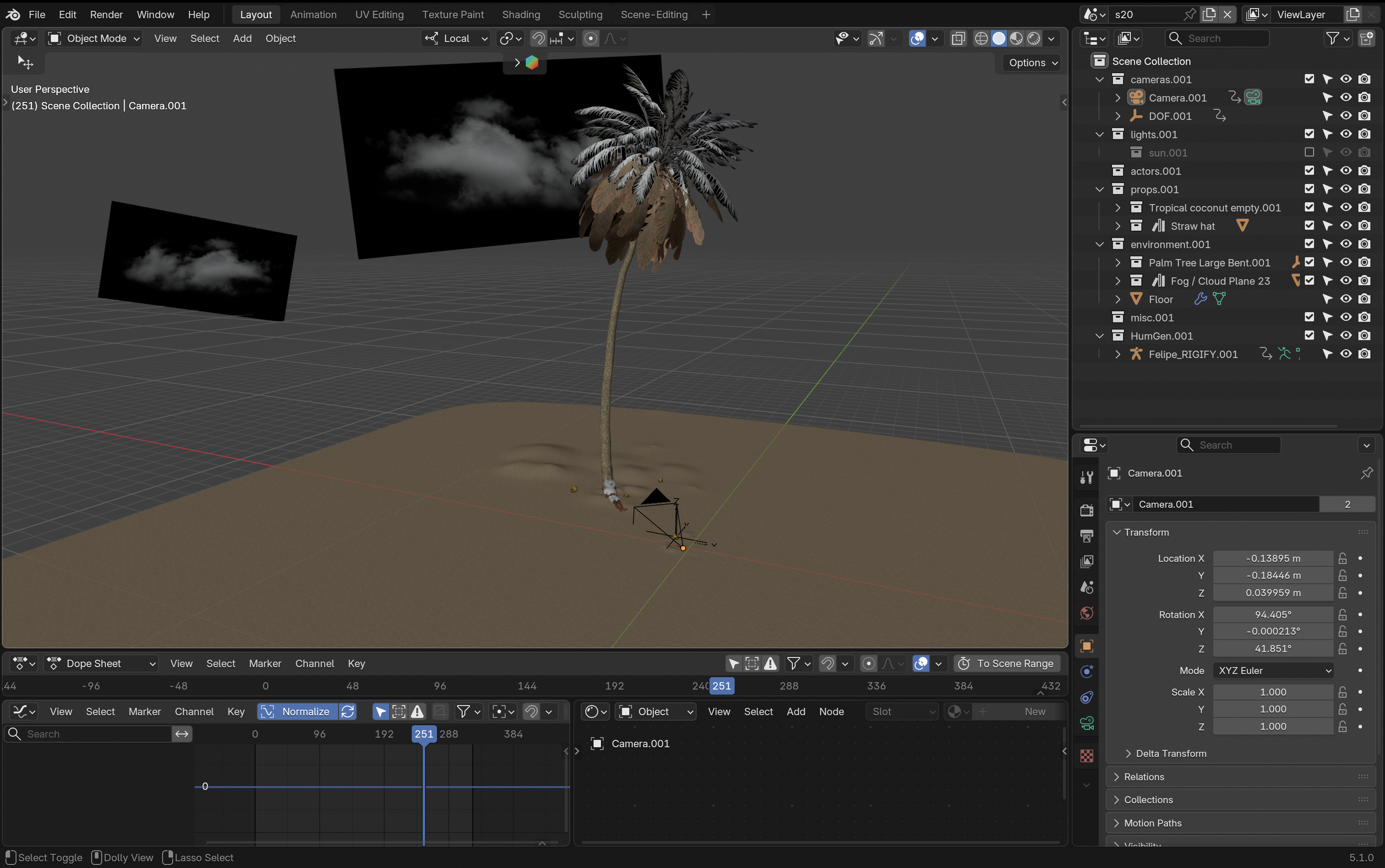
Once the concept was locked, the first task was asset gathering and world-building. The scene needed a convincing tropical environment — a bent palm tree, sandy ground, the right quality of Caribbean light. I sourced and assembled 3D assets and began blocking the two shots in Blender 5.1, treating it the way I would a feature production: cameras first, story second, polish third.
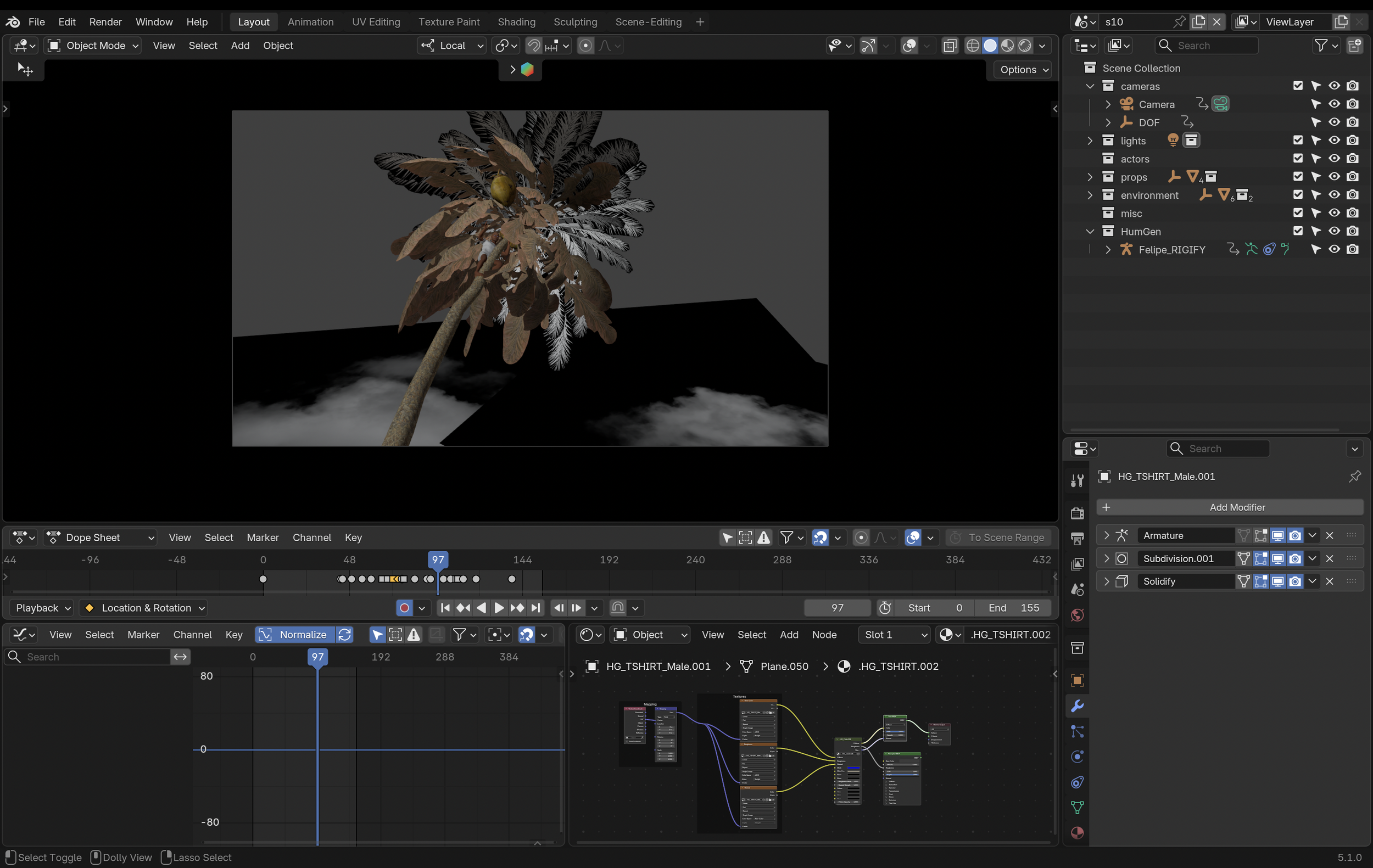
The two shots — internally labelled s10 and s20 — were built as separate Blender scenes with a shared asset library, keeping things organized and render-ready without unnecessary bloat.
Character and Rigging
The character, Felipe, was rigged using HumGen and integrated directly into the scene alongside the environment and props. Having everything living in the same organized outliner made it fast to iterate on timing and camera angles without losing my place.
The Palm Tree Problem
One of the more interesting challenges was getting the palm tree to feel alive. I used Blender's SimpleDeform modifier — a Twist and a Bend deformation both driven by keyframe animation — to simulate the subtle sway of a tropical palm in warm wind. Lightweight, controllable, and it reads exactly right on camera.
Lighting and Compositing
Both shots were lit with a single sun lamp to replicate honest midday light — hard shadows, warm tones, high contrast. The compositing pass layered in Glare, Bloom, Vector Blur, Chromatic Aberration, and a color grade to push the warmth and cinematic feel I was after.
Sound and Music
For audio I used Upbeat, a music licensing service, to find a track that matched the laid-back, sunny energy of the piece. Clean, affordable, and exactly what an independent production needs.
What I Learned
Keeping a production tight — two shots, one environment, one lighting setup — is a discipline. It forces fast decisions and real commitment. It also surfaced some workflow improvements around scene organization and compositing that I'll carry into every project going forward.
Every internal project like this makes the next one faster. And the one after that better.
What's Next
Coco Drop is one piece of a growing body of work I'm building at BVIZ — a portfolio that reflects the quality and range of stories I want to tell, and the kind of productions I want to attract.
The studio is young. The foundation is being laid one project at a time. And I'm looking for the right people to build it with.
If you're a brand, studio, or creator with a story that needs to move — I'd love to hear about it. And if you're a skilled artist or animator who wants to be part of what BVIZ is becoming — let's talk.
Gustavo Bertrán | Founder, Studio Brightlineviz Inc. | BVIZ | Montréal, Quebec 🇨🇦
Tools used: Blender 5.1 · HumGen · Upbeat